


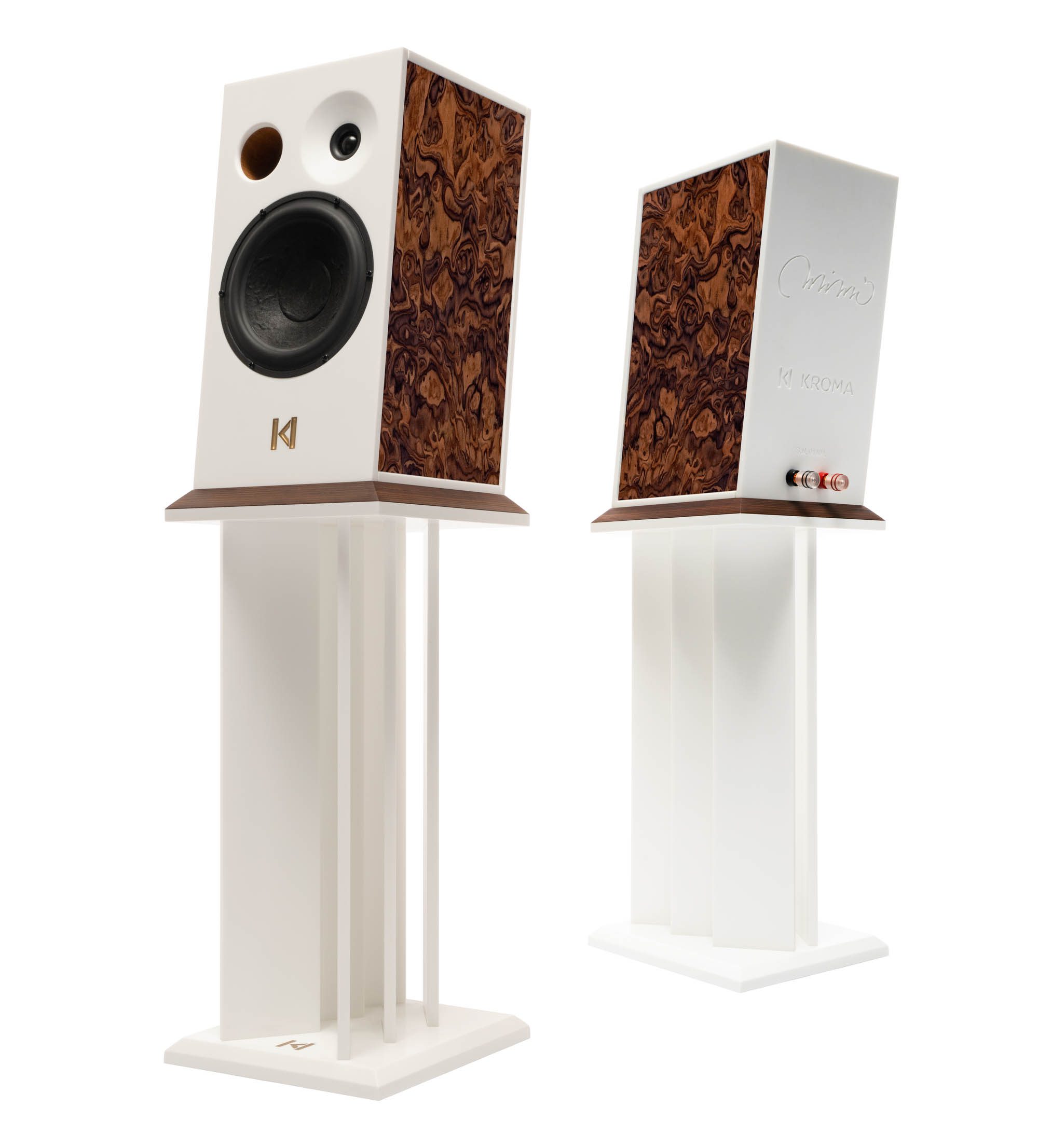
The Mimi is a ‘Tiger Moth’ of a loudspeaker. While that probably prompts a solid ‘huh?’ from most people, to a few that explains a lot. Here’s why; the De Havilland Tiger Moth biplane was a well-liked trainer aircraft used by the Royal Air Force (and others) from the mid-1930s until the 1950s because it was considered an easy aircraft to fly but a hard aircraft to fly well. Virtually every allied pilot flying in the Battle of Britain learned their craft in a Tiger Moth, and some are still in private use to this day. This is useful for more than simply padding out the text, as partnering and installing the Mimi is also easy to do but hard to do well, hence the whole RAF-related aside. You can use it with more or less any amplifier (90dB efficiency and an eight-ohm load would not tax any modern amp design except possibly one of the handful of super-low powered single-ended triode amps), but careful choice makes a big difference.
Similarly, the difference between getting the loudspeakers broadly in the right place in the listening room and taking time to micro-manage that right place is crucial. In fact, this was one of those loudspeakers that benefitted from being fired along the room rather than down its length. It seems placement relative to the rear wall isn’t as important as its position relative to the side walls and any reflections produced by those walls. Some subtle room treatment for side wall reflection is also useful, suggesting a loudspeaker with excellent dispersion qualities.

Interestingly, while getting the partners and placement right is paramount, the Mimi is not so fussy as to room size; its physical size and that it has a single 165mm bass driver per side puts it more into small to medium-sized rooms (the kind of spaces most urban city-dwellers might have), there is a good degree of flexibility in room dynamics. In no small part, that comes down to the bass delivery from that driver, which is capable of some extremely deep and rich tones. The Mimi just about passes my Trentemøller test, as those fast, almost square-wave deep beats in ‘Chameleon’ [The Last Resort, Poker Flat] don’t choke up the front port unless played at ‘healthy’ levels. However, in playing that track, the ‘fight or flight’ response one can get to deep, malevolent bass tones is fully retained. Usually, those deep bass notes are the stuff of bigger loudspeakers than the Mimi, so making those Lovecraftian rumbles is a sign of quality.
Really good loudspeakers fall broadly into two camps; those that go for absolute precision and fidelity to what is recorded, and those that go for a more musically integrated approach that is always a pleasure to hear. The Mimi falls very much into that latter camp. Those who want to extract sonic information from their recordings to get that peculiar ‘accuracy under duress’ stark presentation will find the Mimi wanting; this is all about making a sound that is lifelike and engaging; you are always aware of listening to music – not simply the sound music makes while trying to escape the loudspeakers – through the Mimis. That means a lot of those test-bed recordings that I’ve played so much I’ve worn the digits flat, end up either being musically uninspiring (I’m looking at you, Rachmaninov’s Symphonic Dances and also at you Un Bal by Berlioz… it’s a fine piece of music, but not the classical be-all and end-all it sometimes becomes in audio reviewing), but others truly shine.
Trending Articles
See all
By Alan Sircom
More articles from this author


Read Next From Review
See all
D’Agostino Audio Pendulum
- Jul 14, 2026
Meze Audio 105 AER
- Jul 14, 2026
REL T/9x SE
- Jul 14, 2026
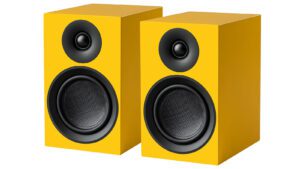
Pro-Ject Speaker Box 5 E Carbon
- Jul 14, 2026