


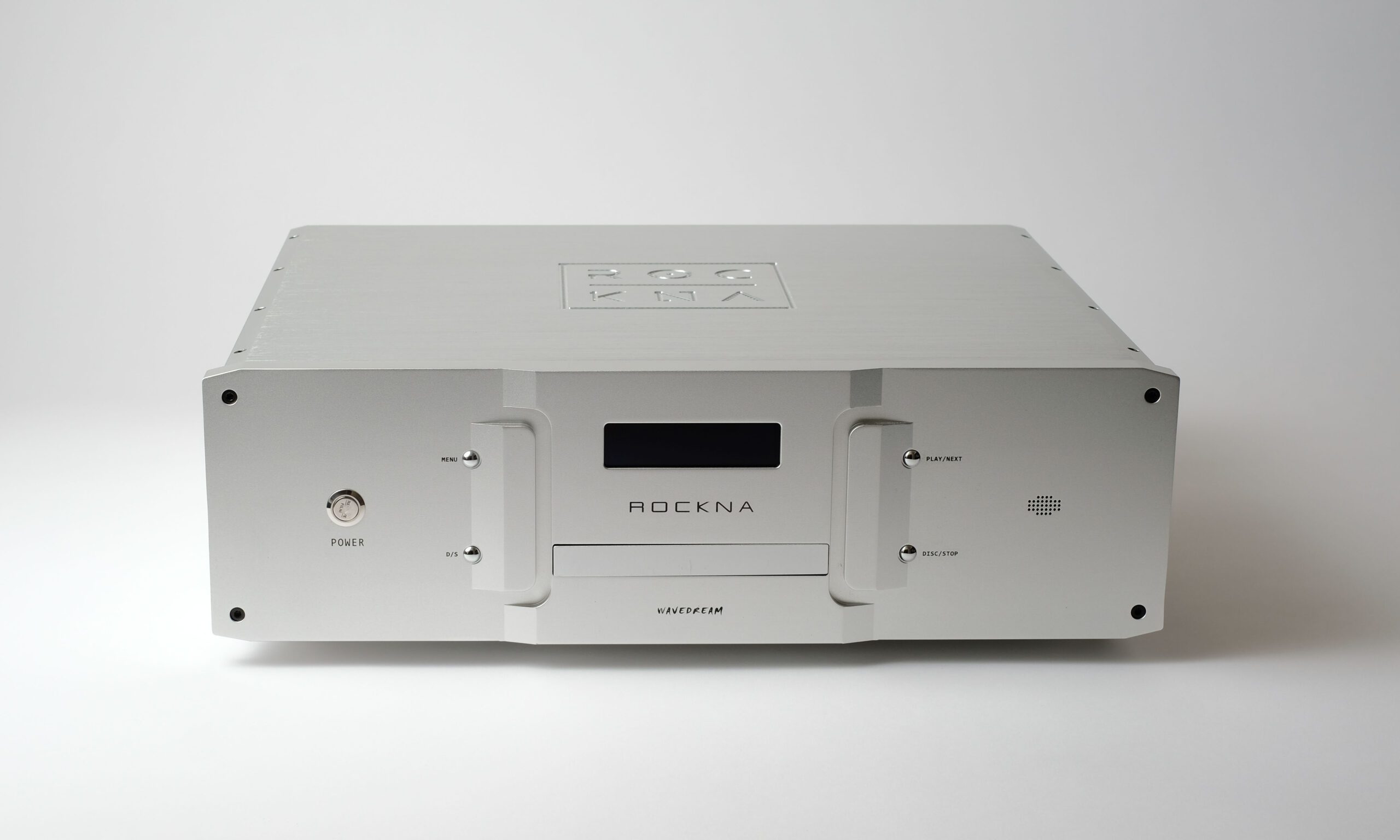
This isn’t our first rodeo with the Rockna Wavedream; my colleague Jason Kennedy went a few rounds with the Wavedream DAC here, but the addition of the Wavedream NET combination CD transport/server makes for a very different proposition altogether.
Ostensibly a buffered CD transport and DAC combination, the fun begins with the Wavedream NET in its dual role of CD player and full-function music server, sporting all the latest physical and software connections. And it really is a dual role; the CD transport stage shares little with the server, meaning that when the Wavedream NET is being a CD player, there is no influence from the server-side of things, and when it’s a server, the whole buffer and disc transport side keep to themselves. While this might seem counter-intuitive, it’s the right way of doing things.
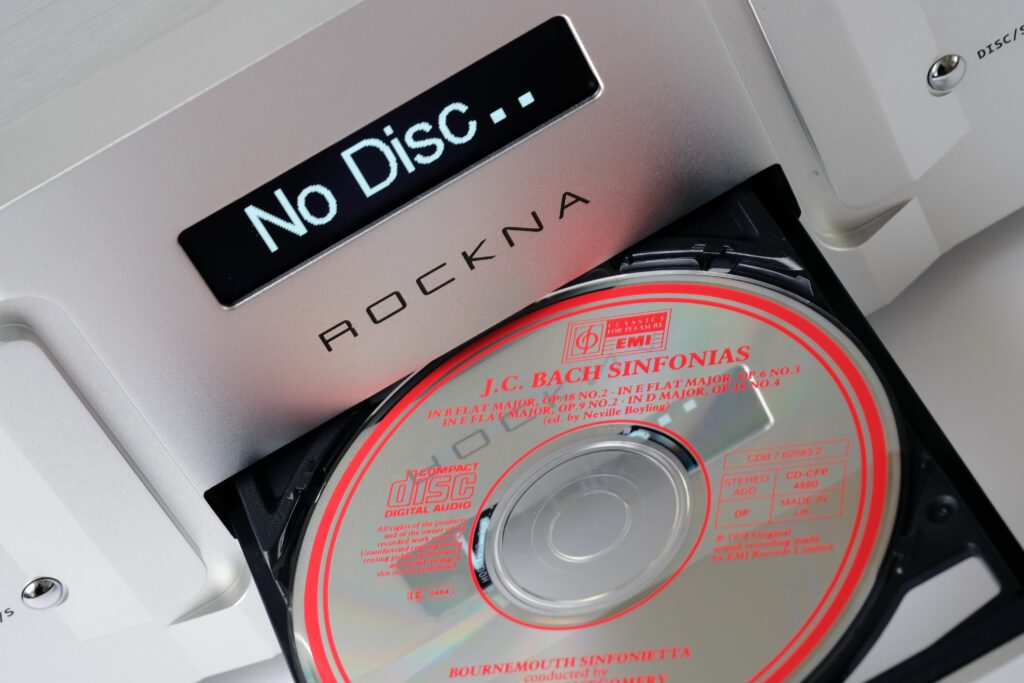
The NET includes its own ripping software to burn and store CDs (either in its own onboard SSD storage or distributed through connected network-attached storage), but the ripper does not use the NETs own transport mechanism. For that, you need to buy a separate computer disc transport and connect to one of the rear USB ports. In fairness, when we spoke to Nicolae Jitariu, CEO and principal brain behind Rockna, he said that “the CD transport part is stand-alone and does not use the server-side at all. If we chose to make the CD playback use the server CPU, there was a good chance that we could not get the same sound quality.” In this respect, he was referring to both its use as a ripper and as a standalone player. While Jitariu suggested this might be a future option, (“We are exploring an option that will include an internal switch regarding the drive connection which would be ideal, possibly making a hardware revision in the future if it ended up working fine”), he was also quick to point out that it might be academic, “There are not many people using the ripping feature as far as I know. Instead, they use local storage or streaming.” This seems to tally with the results from a lot of server manufacturers we have spoken to recently. While the idea of ripping CDs is still a ‘thing’, most people have either already ripped their discs or have moved over to streaming sources like Qobuz and Tidal. The notion of having a damn good CD player still holds for many, but often independent of the streaming and networked audio option. With the Wavedream NET, you get to keep those options open. And, if you do decide to rip discs, USB-based drives are still cheap and relatively widely available. Rockna uses a backbone of Cdparanoia for its ripping software, which both compensates for the hardware and creates a bit-perfect rip. The use of Cdparanoia also points to the Rockna Wavedream NET’s Linux operating system architecture.
If you look to the rear of the Wavedream NET, alongside the usual suspects (S/PDIF through RCA and BNC, a balanced AES/EBU output on XLR, a fast Ethernet connection, and two USB ports) there are also two HDMI links for I2S connection. This was originally designed with the idea of multiple inputs and outputs, allowing the Wavedream NET to form the hub of a far wider digital audio network. While this isn’t the digital future that we ended up living in (multiroom systems tend to run along Ethernet because of the physical limitations of other cable architectures), Jitariu does point to the potential use of that second HDMI link, “In the future, we plan to use them together in a so-called ‘super-I2S’ connection, which will only work between our devices. Of course, a dedicated software needs to be written, but that’s the plan.”
That requires a DAC with two I2S-enabled HDMI connections, which brings us neatly on to a quick recap of the highlights within Rockna’s Wavedream DAC. The Wavedream DAC is based on R2R ladder DACs and can be purchased in single-ended form with its custom RD-1 converter modules, or in balanced guise with XLR outputs and two RD-0 ladder DAC modules to produce a genuinely balanced output. There are also Signature versions of both balanced and single-ended DACs that use superior quality passive components in vital parts of the digital and analogue pathway. The modules themselves are complex pieces of technology, sharing a ‘discrete sign-magnitude hybrid ladder topology’, driven by a sophisticated – and, if needed, upgradable – algorithm embedded stored on FPGA. Both modules can sustain a maximum sample rate of 6MHz. The DAC output is run unbuffered, but allows users a range of adjustment options; as well as selecting from linear, minimum, and hybrid filters or no filtering at all. Rockna upsamples all inputs 16 times and the DAC operates at either 768kHz or 705.6kHz depending on the original signal. It includes Rockna’s unique Femtovox clock distribution architecture to reduce jitter in key sections of the converter, rather than just aiming for a pointless ‘lowest jitter ever’ overall figure. The output stage is a discrete design using traditional ‘through hole’ components, combining J-FET and bi-polar transistors in a Class A design. The DAC can play both PCM and DSD digital formats to 32bit 44.1-384k PCM, and DSD64-512 on its USB and I2S links, and supports HQPlayer but eschews MQA. Like its Wavedream NET counterpart, the Wavedream DAC uses a high-grade linear power supply, and also like the NET, the DAC supports twin I2S HDMIs, USB, AES/EBU and S/PDIF over RCA, although both Ethernet and the second BNC digital output of the Wavedream NET are not matched in the DAC.
Tags: DIGITAL AUDIO PLATFORM ROCKNA WAVEDREAM DAC ROCKNA WAVEDREAM NET
Trending Articles
See all
By Alan Sircom
More articles from this author
Read Next From Review
See all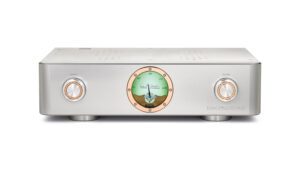
D’Agostino Audio Pendulum
- Jul 14, 2026
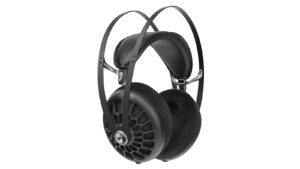
Meze Audio 105 AER
- Jul 14, 2026
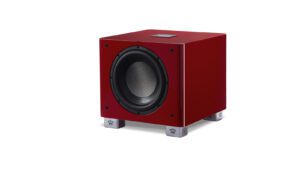
REL T/9x SE
- Jul 14, 2026
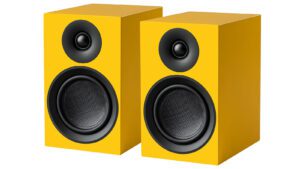
Pro-Ject Speaker Box 5 E Carbon
- Jul 14, 2026