


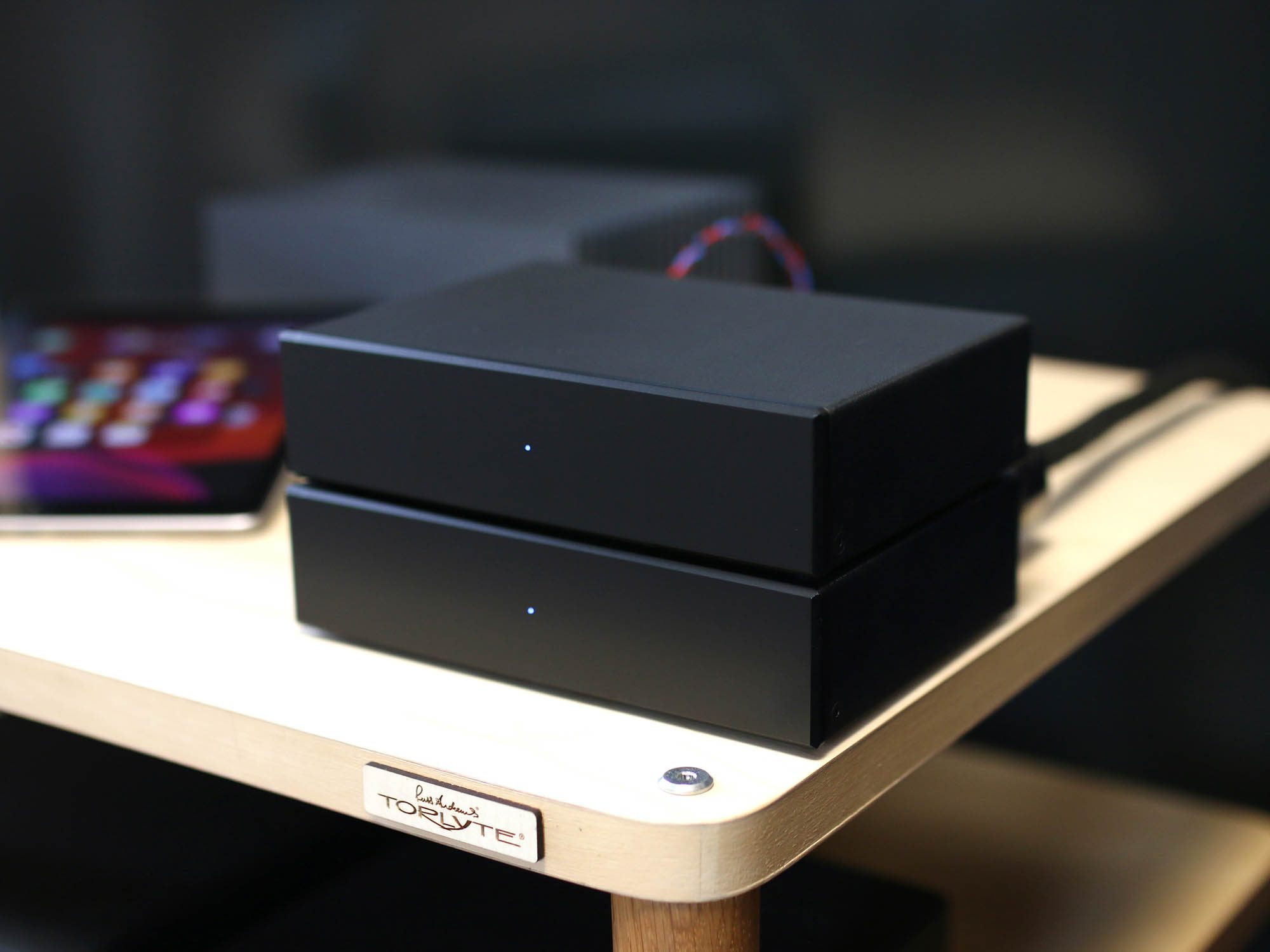
A couple of years ago, the concept of an audiophile network audio switch was all but the stuff of sci-fi. Now, however, it has become a staple of the modern face of good audio. What’s changed? In no small part, it’s the result of an ever-broader acceptance and understanding of audio meeting the requirements of networked audio. The ‘everything makes a difference’ drive of modern audiophiles might not extend to the direction of a water faucet or folding over pages in books anymore (what happened in the 1980s stays in the 1980s), but it does reach almost everything electronic in and around the audio system. The RANS-1 by Russ Andrews takes a lot of the good concepts in traditional audio electronics and applies them to the network connections we use to get the music that drives those audio electronics today.
The RANS-1 approaches the network switch in a classic audiophile way; it separates the boxes into ‘gubbins’ and ‘power supply’, then uses higher-grade components in both to get the best possible performance out of the ‘gubbins’ part. l am not being dismissive here; this is a tried, tested and trusted way of improving an electronic circuit in the audio world and it has worked for the preamp, phono stage, DAC and even streamer, so why shouldn’t it work on a network switch? OK, the naysayers (of which there are many, and Russ Andrews makes products that are naysayer-magnets at times) will argue that in many cases adding a separate power supply and more esoteric components in a device is little more than gilding the lily, but they say that about a lot of things. Sometimes, a spot of lily-gilding can produce results, even ones that aren’t in the 1940s book of audio engineering.
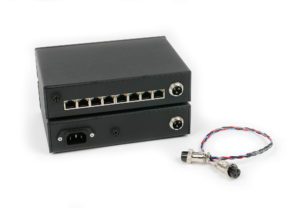
The Russ Andrews RANS-1 is an eight-port gigabit switch in identical and nondescript enclosures with pinpoint blue LEDs on the front and the usual array of yellow and green LEDs to accompany each port. This eight-port switch is given additional shielding and damping, as well as a custom Trichord clock. The box without any ports is a linear power supply with a single IEC inlet (a Russ Andrews Yello power cord is provided) and the two are connected by locking three-pin power connectors, with a short (0.3m) Kimber PBJ cable to hook them together. The power supply feeds the switch and its internal clock with separate supplies. I guess if you asked nicely you could play ‘Pimp My RANS-1’ with a more exotic power cord and connecting cable, but this is more than enough.
Trending Articles
See all
By Alan Sircom
More articles from this author


Read Next From Review
See all
D’Agostino Audio Pendulum
- Jul 14, 2026

Meze Audio 105 AER
- Jul 14, 2026

REL T/9x SE
- Jul 14, 2026

Pro-Ject Speaker Box 5 E Carbon
- Jul 14, 2026