

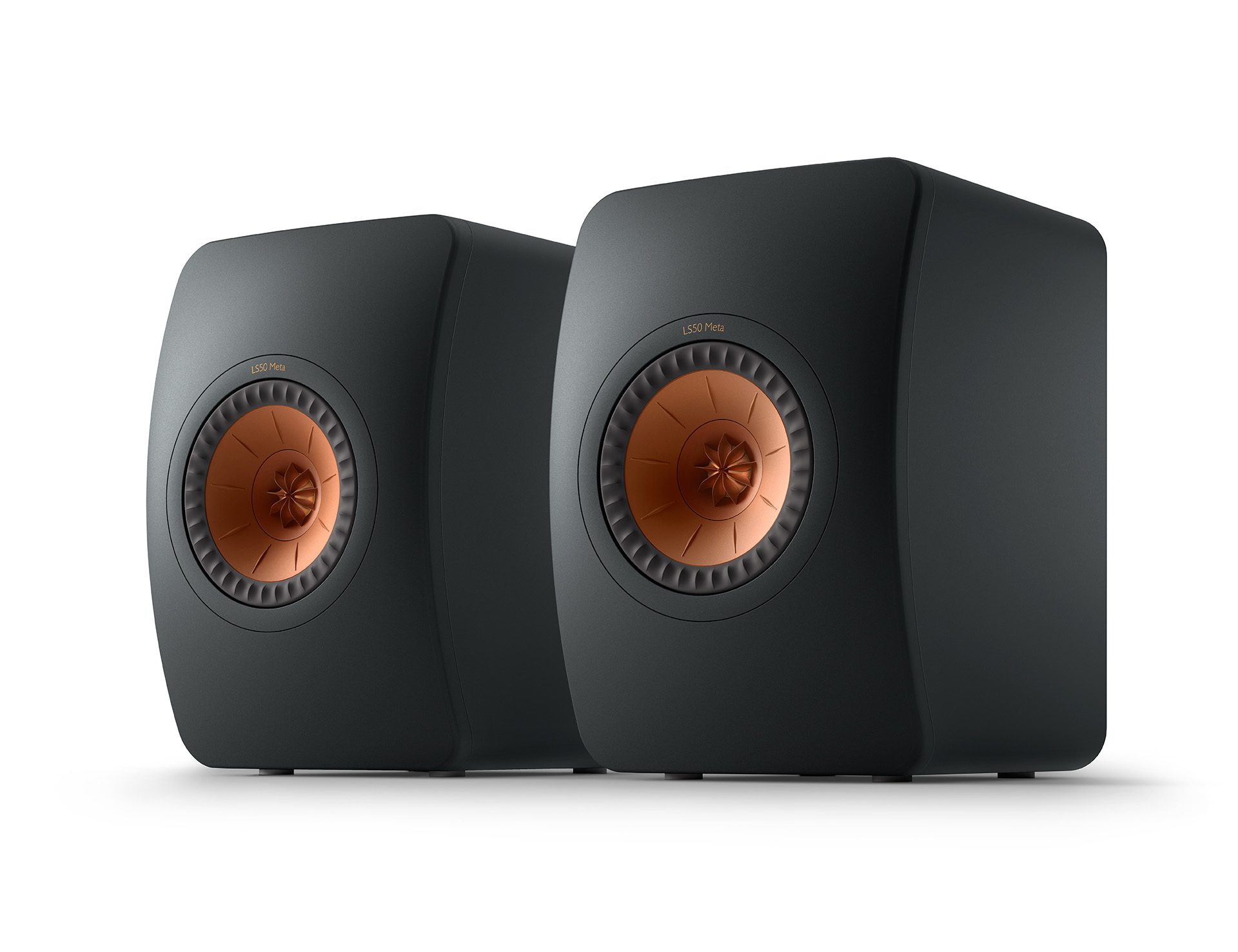
The KEF LS50 Meta has some big shoes to fill as the LS50 was one of the best-loved loudspeakers of its time. It was, however, perhaps a little bit rough-edged at times, especially when playing classical, folk or jazz. They were transparent, with a fine sense of musical bounce into the bottom end, but when faced with the elegance of a fine folk or opera singer, the original LS50 perhaps lacked a little finesse and elegance. In fairness, this was more than made up for by its detail, imaging and impressive senses of scale, headroom and dynamic range for a compact loudspeaker.
The LS50 Meta addresses the elegance issue without undermining the speaker in any of its over performance objectives. The LS50 Meta is significantly more refined than its predecessor. When I had a pair of LS50s, I was surprised at how well they played ZZ Top, but now they add Mahler to that list of impressive things played loud for scale.
I hardly noticed the cabinet of the LS50 singing along with the tweeter, but in hearing the LS50 Meta, you quickly recall where it used to interact because such cabinet intrusion has been whisked away. That high frequency ‘sizzle’ that made the LS50 a little too exuberant at times has gone, but it hasn’t taken any of the excitement to the higher frequencies with it. Instead, you get energy and extension without any sense of ‘sizzle’ or ‘zing’. This means Joyce DiDonato’s voice singing Bellini’s ‘I Capuleti e i Montecchi’ [Stella di Napoli, Erato] holds a purity and finesse that the LS50 could never fully reach. While it also retains the drive and impact of the original LS50 (which comes over in the space around her voice and her ability to sing at eyeball-rattling intensity), the addition of that ease and refinement in the upper midrange and treble is beguiling and highly addictive.

In fact, the LS50 Meta is more of an all-round win than first expected. Yes, it makes well-recorded music soar and spring to life even more than it did before, but it is also in the process a little more forgiving of some of the less-well recorded albums in a collection: I’m looking at you, Oasis… (What’s The Story) Morning Glory? [Creation] might have sold in the grillions, but it sounds thin, shouty and compressed. The LS50 Meta doesn’t transform it into an audiophile recording, but neither does it make an already vexatious recording unlistenable. That clean, refined mid-range and treble don’t tame this album, but neither do they expose painfully its sonic iniquities.
It’s difficult in this review not to ignore the importance of the original LS50 sound, and instead focus on the improvements between that and the LS50 Meta, but it’s worth going over what’s unchanged in the presentation because it’s still so damn good. This is a loudspeaker that images beautifully; there is a three-dimensionality to the sound that both scales well (small sounding vocals remain small, over-produced 1970s Olympic Studios drum sounds remain giant) and can cope with everything from small folk combos to large orchestral pieces, remaining surprisingly solid and precise throughout. It’s also extremely dynamic and times surprisingly well, too. Vocal presentation in particular is clear and articulate, as you might expect from a loudspeaker designed to carry the LS3/5a baton into the 21st Century.
However, in truth, I thought the name a bit silly and expected to lay into KEF over it (“What’s next? The Blade Zeitgeist Edition?”), but in fact, it’s absolutely right. This is not a ‘Mk II’ or a ‘special edition’, but it’s more than just an LS50 with a lower-case vowel as a suffix. ‘Meta’ has several meanings, but the three that spring to mind are ‘describing something of a higher-order (like a metalanguage)’, describing a change in condition (like metamorphosis) and something self-referential (but not in a sarcastic way). The LS50 Meta ticks all those boxes; it’s made very much with reference to the LS50, but the LS50 is transformed by the Meta updates, and it makes it a higher-order design.
Finally, I tried the LS50 Meta with the S2 floor stand designed for the original LS50 and still very much in production. It’s both a visual match and a sonic improvement to the loudspeaker itself. It’s the right balance of mass (too much mass can make the LS50 models slightly bass light, while too light makes them a bit ‘zingy’ in the upper mid), and the pairing results in a ‘nothing to criticise’ £1,400 combo.
Would the LS50 Meta win me over if I didn’t like the originals in the first place? Probably not, but the improvements mean you shouldn’t dismiss them out of hand. OK, if the reason you didn’t like them in the first place comes down to not liking the sound of Uni-Q then no amount of Meta is going to change that (personally, I’ve never ‘got’ this argument, but some simply don’t like one speaker in the acoustic centre of another on a point of principle). However, if your reason for not buying a pair was because you felt the original LS50 ‘a little uncouth’ or ‘a bit unrefined’, the LS50 Meta fixes those concerns, and then some.
Trending Articles
See all
By Editor
More articles from this author


Read Next From Review
See all
D’Agostino Audio Pendulum
- Jul 14, 2026
Meze Audio 105 AER
- Jul 14, 2026
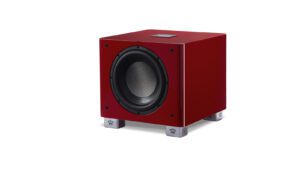
REL T/9x SE
- Jul 14, 2026
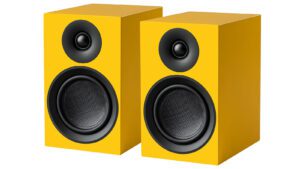
Pro-Ject Speaker Box 5 E Carbon
- Jul 14, 2026